
TABULA RASA, ANTITHEIST
ON GOD AND ART .

DISCLAIMER: I do not want to be guided to faith, if anybody wishes to attempt that after this. I am not guiding you to denial of your faith, either. Free will, remember.
John Locke proposed the Tabula Rasa thought of philosophy in the 17th century. My family took it by heart in the 21st century. In his theory, Locke claims that a child is an empty slate. A blank canvas, a clear sheet of paper.
This proposes that our minds are like empty recorders, that play upon experience, and reflect. The nurture of a child succeeds its nature. What it learns is who it is.
I am seventeen, and I feel like I know everything there is to know to a moral, subversive, persona level. In Locke’s philosophy, that might’ve become objectively correct. I am a canvas that has been painted over a number of times, scrapped off another number, leaving stains and imprints of what could have been.
Locke states that the canvas broadens, or the potential of a child increases with age, but there has been no standardisation to his claim. I was born with an infinite canvas, and yet I was only layered upon at the spots that were convenient. Maybe the limit exists for convenience.
He believed no knowledge is innate, and I assumed everything about my ability has been innate. Everything external can only exist within me with my internal, innate ability. Like matter, and anti matter. Except there’s no flaw this time, and one does not overpower the other. Thinking is a ‘muscle’ memory.
I questioned Locke’s philosophy with a simple question. Turns out he had been the empty slate he loved so much. A God believing empiricist. That is what I call a hypocrite. [ The rise of early empiricism during the renaissance also involved decentrilasation of God to humans. ] [ The question asked was if he was religious. ]
His innate ability to experiment rendered useless by scrapping off internal motives to create an empty slate for religion.
His theory propounded that a kid would learn whatever he was taught, and when Bible studies failed, he assumed potential as an internal force dwindling with his theory. He believed there could have been equality in development, and yet there were no estimates and standards to this internal potential that blocked his free canvas.
Sorry, I get bitter at wasted potentials.

Locke, as to infuriate me further, believed aptly that morality of a human laid in the hands of God’s willing. The concept of self interest became a flaw, and by natural order, we turned to God to remind ourselves of what is ethical, and what is not. His freedom of thought in religion only went as far as divulging into self interests, but to always return back to the creator as his subjects.
His free thinking did not involve the freedom of not practicing religion at all.
But if you read some of his later works, then you could see he clarifies his position by attaching importance to the rewards and punishments of the hereafter and obligating to the laws of decrees given by God. And he also puts a great degree of importance on the divine laws.
Locke also condemned the atheists, cause the atheists cause bigger troubles by denying God and His laws. They deny the highest order of nature and it leads to chaos by the denials of morality and finally may lead to Nihilism.
Locke remains a strong believer of the reward system presented by God, similar to that of a lapping dog. His stand as an empiricist proves faulty as he condemns atheism— a practice and opinion that only evolved as a popular movement after the movement of empiricists.
DECEMBER 15, 2025 — A BRIEF BREAKDOWN OVER RELIGION
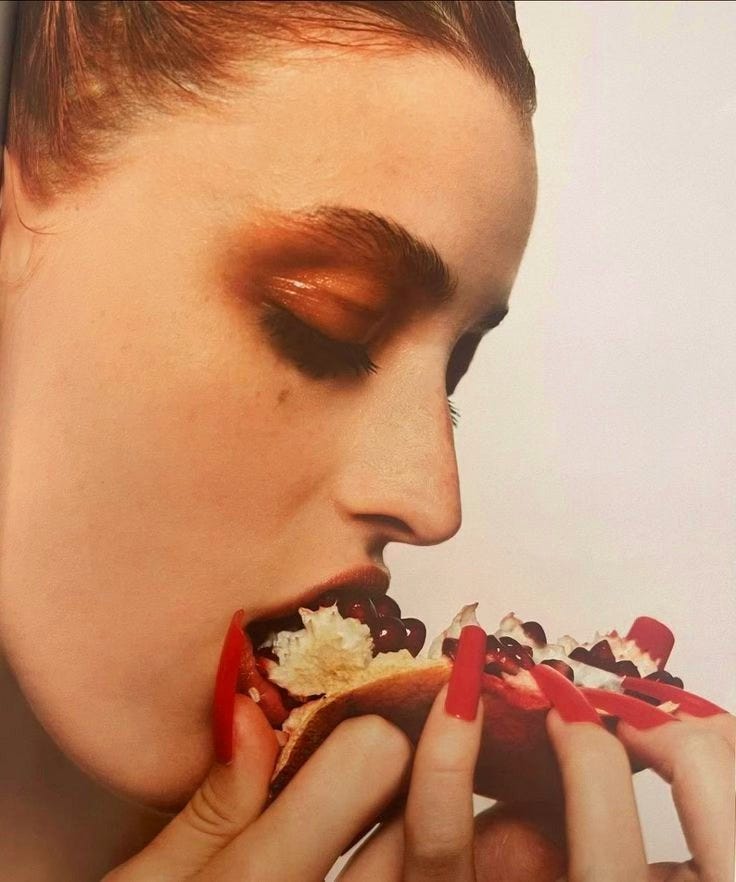
As a child, I was fed God in the plates of art. An empty slate needs to be taught precisely. I learned to have faith in Art, never in God. So I feasted. I licked God clean so I could see what was left below for me to see. Religion was punishing, and it felt like a challenge. I cleared it to view Art.
I have ritualistically written about two things I have no experience in: sex, and Faith. The one with the capital F, the one that has apparent powers to surpass all mortality. I am neither holy, nor ‘unholy’.
It is hilarious how humans tendencies are often all so unholy. Praise the virgins. We should be categorised as creatures of sin.
Perfect mortality should not include an epiphany, a checkbook, and a Eureka. It is dirty and it is sensational, in all means of a canvas.
What is the point of being empty slates if we are not obliged to mess it up? I have oscillated between Faith and Love ( with a capital L, because it is an ethereal experience, I think— its purest form bound away from our reach.) for so long, that there has come a point of me that is moving so fast, that an illusion of a centre steadiness occurs, that neutralises me from the perfect dual experience or mortality and immortality.
If we think hard enough, we are all immortals. Corpses are mortal, imprints are not. A name is mortal, a vision is not. Heedless it is to say, that humans will be forgotten. Warfare is also art. It is terrible art, and humans have mastered it. It is a shameful thing to admit, indeed.
Anyway, in sex, and in god, there remain patterns. Subtleness for something so unreal. Moving of bodies into unnamed shapes. The idea of knowing everything. For a moment, feeling invincible. The quick swing from Nirvana to a gun to your head. Kurt?
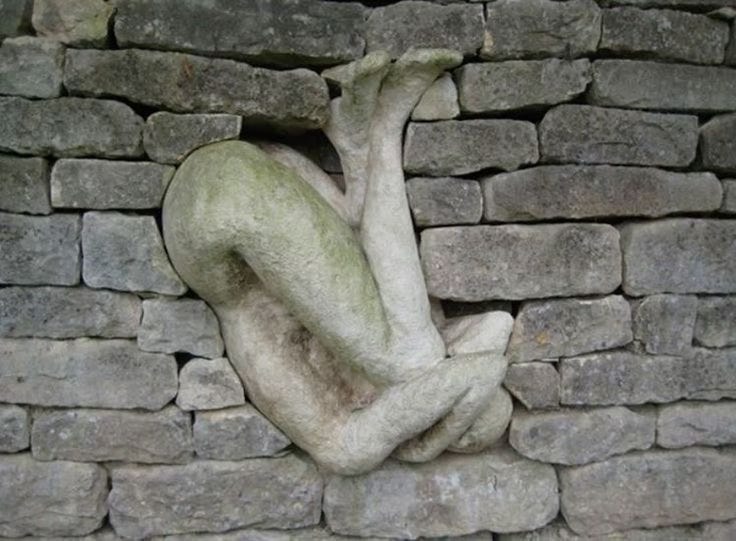
Sex disgusts me, more often than not. But there is a lot more ethics to its history than there is to crime over faith. It is taboo, and it is looked down upon. Yet, it’s visceral, and bold, and innately, scientifically human.
To my knowledge, it shows the same power play seen in religion, and yet there is a form of cohesiveness and affection in sex that you cannot receive from a power on the pedestal.
An art will always mock its creator. If it does not, it is simply not valuable enough. In either case, it does not explain the behavior of a person. One refuses to mock out of fear. It is not admiration, dearest. How big is your admiration? How big can it be? If it is bigger than your empathy towards humanity, then turning to your creator for morality seems hapless. He has faulted you. His pride becomes bigger than peace, and I cannot withstand that as a fact. It is fear, dearest.
I do not deny that it is a privilege to not believe, because it is. I consider myself rich in the matter of opinion. Plenty may need their northern star to push through life. But my only argument remains is the one thing they hold faith in, is the one thing that fails them the most. The system that suppresses the ones with no privilege is the Sun to the same.
What disgusts me is that the God they get on their knees for a better life has a propaganda revolving around him that is causing them to have bruises forevermore. Religion blesses nobody.
My lack of belief is as selfish as their belief, and it does not make me a higher person. There’s streamlines to living, and I am simply not in favor of the kind that relies on a force that refuses to.. well force.
I did not find God in misogyny, and I blamed religion. I did not find God in being assaulted multiple times, and I blamed religion. I did not find God in warfare, and I blame religion. I am not afraid of a higher entity banishing me to eternal pain, if it proves that it exists.
My holiest moment was in the sea, as it reminded how quickly nurturance could turn into painful death, and I chose to love it. It was when I carried out plastics of religion out of the water, and the sea chased me to the shore, wishing me to come along again. It was playful. Nature is the higher entity.
One often makes God their world, but forgets to make the world their God. The one that truly nurtures and punishes.
As an artist, I am appalled at our ‘creator' leaving their art to just be.
I’d believe in a higher force of power, but it would not be called God. It would not be a he. It would not resemble a human. It would not have been able to be understood. It would have no empathy. No emotion.
We would be neglected art. We are neglected art. Of God, as some say, or of the universe, as I do. We are brats that seek attention from abstraction.
We seek attention from undefined art. Go, little Painter, go. Just do not disturb the whole world amidst your journey.
not only we’re neglected art, we’re probably accidental or abandoned piece of art
with no blueprint, no promised meaning,
no curator waiting to explain us.
probably that's where Locke's perspective would enter...
not as a theory of purpose, but of aftermath.
we arrive without instructions and start from scratch, forced to assemble coherence from experience alone. meaning, then, isn’t discovered it’s improvised.
not destiny,
just damage control with consciousness.
Wow 😳